

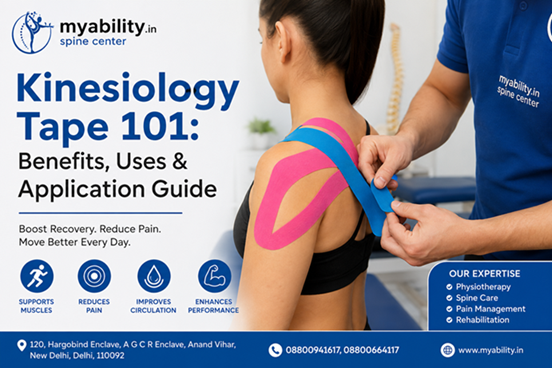
Kinesiology Tape 101
Did your friend just recommend using kinesiology tape, but you have no idea what it actually is or whether it’s even right for you? You’re not alone.
A quick search for kinesiology taping near me will show you plenty of clinics and therapists, but before you book a session or buy a roll of tape, it’s worth understanding the basics.
Knowing what kinesiology tape does, how it works, where it should be used, and when to avoid it can help you make a better decision. This guide covers everything in simple words, so you know exactly what to expect before trying kinesiology tape for yourself.
What Is Kinesiology Tape and How Does It Work?
Kinesiology tape is a flexible therapeutic tape that is designed to support your muscles, joints, and body movement without limiting mobility. Many people also explore complementary options, such as massage therapy near me, for additional muscle relaxation and recovery support.
Coming back to talk about Kinesiology tape, it was developed by Japanese chiropractor Dr. Kenzo Kase in the 1970s to provide support that works with the body’s natural movement.
The tape is made from a stretchable fabric, commonly cotton or a synthetic material, with a skin-friendly acrylic adhesive layer. It does not contain pain-relieving medication or active chemicals. Its benefits come from its elasticity, adhesive quality, and the way it is applied to the body.
This is different from those rigid athletic tapes that restrict movement. Kinesiology tape stretches and contracts with your skin and muscles, which allows you to continue daily activities, exercise, and movement after application.
How Does Kinesiology Tape Work?
When applied correctly, the tape slightly lifts the skin, which may help reduce pressure around the applied area and support comfortable movement. The elastic design of the tape provides external support to muscles and joints without holding them completely still.
What Problems Kinesiology Tape Can Help With?
● Muscle Strains and Everyday Soreness
● Sports-Related Injuries
● Knee Pain and Extra Support
● Shoulder Pain and Tightness
● Lower Back Pain and Stiffness
● Neck Pain and Muscle Tightness
● Ankle Sprains and Weak Ankles
● Tennis Elbow and Other Repetitive Strain Injuries
● Plantar Fasciitis and Heel Pain
Kinesiology tape can be a helpful support tool when applied correctly. Search for kinesiology taping near me to get in touch with experts to understand the right application method.
How to Apply Kinesiology Tape Correctly (Step-by-Step Guide)
Applying kinesiology tape is a simple process when you follow the right steps. Even if you search for kinesiology taping near me, you can easily find experts who can guide you with the correct technique.
But if you want to understand how it is applied and try it yourself, here is a simple step-by-step guide to help you get started.
➔ Step 1: Clean and Prepare Your Skin
Before applying the tape, make sure your skin is clean, dry, and free from oils or lotions. This helps the tape stick properly and stay in place for a reasonable time.
➔ Step 2: Trim the Tape According to the Area
Measure the tape according to the body part where you want to apply it. Round the corners to a greater length so that they do not pull the tape off too quickly and easily.
➔ Step 3: Remove the Backing Carefully
Peel the backing slowly, and do not touch the adhesive. This makes it not stick as easily.
➔ Step 4: Apply the Tape Without Stretching the Ends
Stretching should only be applied to the middle of the tape. The ends should be laid on the body with no tension.
➔ Step 5: Rub the Tape Gently
Rubbing the tape softly for a few seconds heats the tape and allows the adhesive to bind better.
➔ Step 6: Check the Tape Placement
No tension or constricting pull should be present on the body. The tape should feel comfortable and should not create wrinkles. How Long Should You Keep Kinesiology Tape On?
Kinesiology tape can stay applied for around 3 to 5 days when it is placed correctly and your skin responds well to it. If you notice itching, redness, or discomfort, remove the tape sooner. Many people also search for massage therapy near me to support muscle recovery and relaxation. Always apply the tape on clean, dry skin for better results.
Can You Shower, Sleep, or Exercise While Wearing Kinesiology Tape?
Yes, you can shower, sleep, and exercise with kinesiology tape applied to your body. The tape is designed to handle daily activities and moisture, but avoid rubbing it after a shower.
Gently pat the area dry to protect the adhesive. If you’re looking for recovery support, searching for massage therapy near me can help you connect with professionals for better care.
Areas of the Body Where Kinesiology Tape Is Commonly Used
Some parts of your body are more sensitive, and applying tape there can cause irritation, discomfort, or unwanted reactions. Before searching for kinesiology taping near me or putting kinesiology tape on any area, it’s important to know where it can help and where you should avoid using it.
Common Areas Where Kinesiology Tape Is Used:
● Shoulders: Muscle support, posture correction, and shoulder discomfort.
● Knees: Commonly applied around the knee area to provide support during physical activity.
● Lower Back: Used by some people for additional support during movement or exercise.
● Neck: Can be applied to support neck muscles and reduce tension.
● Elbows: Used around the elbow area, especially during repetitive activities or sports.
● Wrists and Hands: People dealing with strain from daily activities.
● Ankles and Feet: Used by athletes for support and stability.
● Thighs and Calves: Applied to support muscles during workouts or recovery.
Areas Where You Should Avoid Applying Kinesiology Tape:
● Open wounds, cuts, or broken skin: Tape can irritate the area and delay proper healing.
● Areas with skin infection, rash, or severe irritation: It may make the condition worse.
● Sensitive areas with thin or damaged skin: These areas may react negatively to the adhesive.
● Areas with unknown swelling, severe pain, or unexplained symptoms: It’s better to understand the cause first.
● Over moles, suspicious skin changes, or areas requiring medical observation: Avoid covering them with tape.
Always apply it on clean, healthy skin and pay attention to how your body reacts after application. If you notice itching, burning, redness, or discomfort, remove the tape and stop using it.
How to Prepare Your Skin Before Applying Kinesiology Tape
Getting your skin ready is just as important as applying the tape itself.
● Before applying kinesiology tape, wash the area with mild soap and water. It will remove dirt, sweat, and oil.
● Dry your skin completely, and avoid using lotions, creams, or oils, as they can weaken the adhesive.
● If you have excessive body hair, trimming the area can help the tape stick better and make removal more comfortable.
Many people searching for massage therapy near me also use kinesiology tape as part of their recovery routine. Taking a few extra minutes to prepare your skin helps the tape stay in place longer and gives you a more comfortable experience.
Common Mistakes People Make When Using Kinesiology Tape
Kinesiology tape is easy to use, but do avoid these common mistakes to get better results.
● Applying kinesiology tape on wet, oily, or unclean skin.
● Stretching the tape too much during application.
● Applying tape over cuts, wounds, rashes, or irritated skin.
● Using the wrong taping technique for the targeted area.
● Not rubbing the tape after application to activate the adhesive.
● Applying the tape too tightly, which can cause discomfort or skin pulling.
● Ignoring itching, redness, or irritation after wearing the tape.
● Removing the tape too quickly by pulling it harshly.
● Using old or damaged tape that has lost its sticking ability.
Many people also look for massage therapy near me when they want professional support for muscle care and recovery. Understanding the right way to use kinesiology tape can help you avoid simple mistakes.
Signs You Should Remove Kinesiology Tape Immediately
Kinesiology tape is indeed of great use, but if you notice the following signs while using it, pause immediately and consult your doctor about it.
● Itching or a burning sensation under the tape.
● Redness, rash, or skin irritation around the taped area.
● Swelling or increased discomfort after applying the tape.
● Pain that feels worse after wearing the tape.
● Blisters or weird skin reactions.
● The tape starts causing pulling or tightness that feels uncomfortable.
● Numbness, tingling, or changes in sensation near the taped area.
● The edges become dirty, loose, or start peeling off excessively.
If you are unsure about the correct placement or technique, searching for kinesiology taping near me can help you find trained professionals who can guide you properly.
Pay attention to how your body responds after applying the tape. Removing it at the right time can prevent skin issues and keep your taping experience safe.
Who Should Avoid Using Kinesiology Tape?
Kinesiology tape can be helpful for many people, but it is not the right choice for everyone. Before applying it, it’s important to understand when you should avoid using tape to prevent skin reactions or further discomfort.
● When you have Open wounds, cuts, or broken skin.
● Anyone with skin infections, rashes, or severe irritation in the application area.
● People with an allergy or sensitivity to adhesive materials.
● Those with unexplained swelling, severe pain, or a serious injury that needs medical attention.
● Sensitive or damaged skin that may react to the tape.
If you are confused about whether kinesiology tape is suitable for your condition, searching for kinesiology taping near me can help you connect with professionals who can guide you with the right approach.
Using kinesiology tape correctly starts with knowing when it should and should not be used. Always consider your skin condition and comfort before applying it.
Book Your Kinesiology Taping Session With MyAbility Today
Kinesiology tape works best when it is applied with the right technique and placement. At MyAbility, our experienced therapists guide you through the correct taping method based on your needs.
No matter what you are dealing with, be it muscle discomfort, sports-related concerns, or movement challenges, we help you get the right support for better mobility and comfort. Book your kinesiology taping session with MyAbility today and take a step towards better movement and recovery.
FAQs
Q1. How many times can you shower with KT tape?
A: You can shower normally while wearing KT Tape because it is designed to be water-resistant. But you need to avoid rubbing the tape while washing or drying. Pat the tape dry with a towel and let it air dry naturally to keep it securely in place.
Q2: How is KT tape useful for neuropathy?
A: KT Tape is useful for some individuals with neuropathy to help alleviate some of the pain. The tape uses a method of supportive assistance and increases awareness of the body. However, it may cause further damage to the nerves. For better control of neuropathy, a medical doctor should be consulted.
Q3. How do you tell if KT tape is working?
A: You may notice reduced discomfort, better movement, improved support, or less muscle fatigue when KT Tape is working for you.
Q4. Do the colors of KT Tape mean anything?
A: No, the colors of KT Tape do not have different medical effects or benefits. The performance of the tape is because of the material, stretch, and correct application.
Q5. What is the least painful way to remove KT Tape?
A: To remove KT Tape without experiencing major pain, slowly peel it in the direction your hair grows, and at that time just support your skin with the other hand. You can either remove it after a shower or use an oil to gently loosen the adhesive.
 by
by 

