

Desk Job? How Physiotherapy Can Fix Your Posture
Nowadays, as technology advances in everyday life, in both personal and professional settings, people are spending more time in front of screens. Although this type of lifestyle can be an ideal option for work, this is what is required to build a successful career and achieve success. However, it takes a toll on your body and overall health.
In this blog, you’ll get detailed insights on physiotherapy exercises to fix posture, and why posture matters, global levels of physical inactivity metrics, and real results over time you can achieve by incorporating basic physiotherapy in your life.
The Modern Posture Crisis
Prolonged sitting can lead to poor posture and numerous musculoskeletal issues, like slouched shoulders, rounded backs, forward necks, and tight hips, which are common byproducts. This is another reason why people nowadays deal with chronic pain, fatigue, reduced mobility, and even long-term severe disorders.
Fortunately, some simple Physiotherapy exercises can help improve your posture, prevent such issues, and reduce your pain in 5 minutes or less. These help people working in desk jobs to maintain their ideal posture and remain pain-free and healthy.
Think about how your body feels after a long workday. Shoulders tense? Stiff lower back? Tight hips or sore neck? These are signs that your posture is being affected by your working habits.
Most of the time, in a desk setting, you’re straining your neck to hold your head up. Over time, this can lead to “tech neck” and spinal cord misalignment. Sitting for hours also deactivates the glutes and tightens the hip flexors, which can impact your entire movement system.
Global Levels of Physical Inactivity
The World Health Organization (WHO) always tracks how many people are physically active worldwide. A recent study found that nearly 1 in 3 adults (31%, or around 1.8 billion people) are not active enough. It means they don’t follow the 150 minutes of minimum physical activity per week recommended by the World Health Organisation.
This number has increased by 5% between 2010 and 2022. If things don’t improve, by 2030, 35% of adults may not be getting enough physical activity.
● Women are about 5% less active than men, and this gap hasn’t changed since 2000.
● After the age of 60, both men and women become less active.
● Among teenagers (ages 11–17), a huge 81% are not active enough.
● Girls are less active than boys; 85% of girls vs. 78% of boys don’t meet the recommended activity levels.
Why are People Inactive Physically?
There might be various reasons why it is easy or hard for people to be more physically active in a safe way. Those factors affect people’s daily activity levels. They might include:
● personal reasons (like motivation and health),
● social and cultural factors (traditions or expectations),
● environmental factors (lack of safe places to exercise),
● economic barriers (such as not being able to afford sports or gym access)
Why Posture Matters?
Good posture isn’t about standing up straight or keeping your body upright for some time. It’s about alignment. When your body is aligned properly, your bones, joints, and muscles work efficiently. This alignment reduces strain and energy waste, leading to better balance, fewer injuries, improved breathing, and less fatigue.
On the other hand, poor posture puts stress on the spine and surrounding muscles. This can result in chronic conditions like lower back pain, neck and shoulder tension, headaches, reduced lung capacity, and decreased joint mobility.
This is where physiotherapy is helpful to treat symptoms and address the root causes of postural dysfunction.
How Physiotherapy Helps Fix Your Posture
Physiotherapy starts with a detailed assessment of your body mechanics, posture, flexibility, and strength. An experienced physiotherapist observes how you sit, stand, walk, and move to identify the imbalances and restrictions in the body.
Here are the ways in which physiotherapy can help correct posture in people with desk jobs:
1. Posture Assessment and Education
The first step to fix poor posture is becoming aware of it. You can’t fix something if you don’t bring your attention to it. A physiotherapist will assess your alignment and educate you on how posture affects your body.
They’ll help you understand what proper posture feels like — often something many people have forgotten to learn about, and the negative consequences for the long term. For this, you can search on Google terms like “Physiotherapist Near Me” to find the best therapist to fix the posture.
You’ll also get to know about cues like:
● Keeping your ears aligned with your shoulders will keep your body straight.
● Engaging the core to support the lower back area of the body.
● Balancing weight evenly when sitting or standing throughout the day.
2. Targeted Stretching
Prolonged sitting leads to muscle tightness in the hip flexors, chest, and neck. Stretching these areas restores your flexibility and releases tension.
Physiotherapists might suggest you practice hip flexor stretches, pectoral (chest) opening stretches, and upper trapezium and levator scapulae stretches to relieve neck tension. These are not basic movements; they’re carefully selected based on your body’s particular limitations.
3. To Strengthen Weak Muscles
Poor posture is a result of muscular imbalances, tight muscles in some specific areas, and weak muscles in others. Strengthening the neglected muscles is a key factor in sustainable posture correction.
Common areas targeted include deep core stabilizers, upper back, gluteal muscles and rhomboids, and rotator cuff muscles. Your physiotherapist will prepare a personalized plan to build strength without strain.
4. Manual Therapy and Mobilization
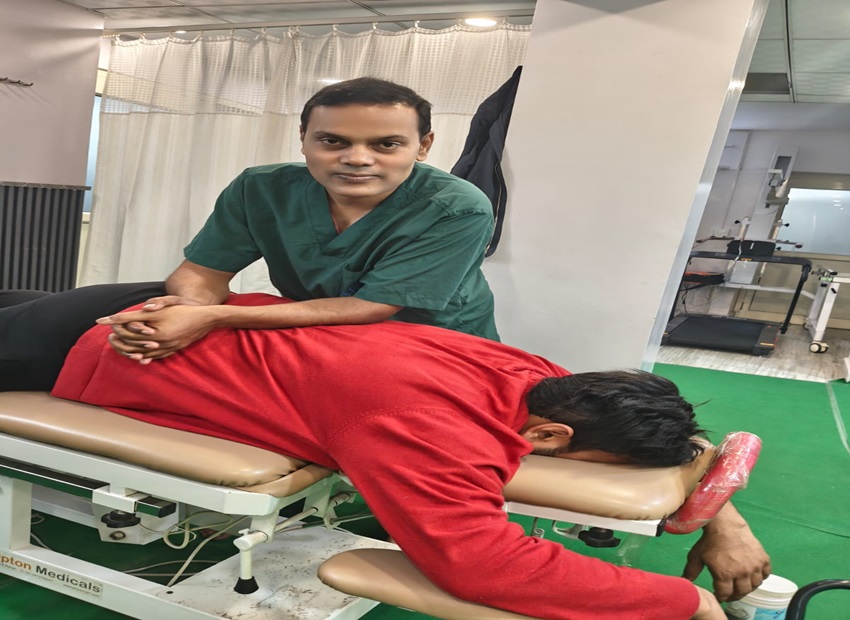
In some special cases, joints and muscles become so tight that hands-on techniques are required to release them. Physiotherapists may use manual therapy, such as soft-tissue release, trigger-point therapy, or joint mobilization, to extend the range of motion and reduce pain.
5. Workplace Adjustment
A physiotherapist treats your body injuries and also studies your work environment and recommends basic adjustments like:
● Adjustment of chair height and lumbar support to maintain posture
● Keeping the monitor at eye level for comfort
● Proper keyboard and mouse alignment on the desk
● Correct foot support and desk height
These small changes to your workspace can reduce postural stress in your body and enhance your overall posture as well as confidence in both personal and professional settings. If you are living in Delhi in the eastern area, you can also search terms like “Physiotherapy Near Me in East Delhi.”
6. Movement Breaks and Habit Building
No matter how well you set up your workspace, sitting for long hours isn’t a healthy habit for your body. The human body is not conditioned to remain in a resting state. It needs movement and proper rest to function properly. Physical inactivity can lead to various issues related to both physical and mental health.
An experienced physiotherapist will guide you on how you can integrate movement into your day, from simple stretches at your desk to hourly walk breaks. These habits help your body reset and stay aligned.
Your Step to Achieve Real Results
Posture correction requires consistency, awareness, and guided intervention. But the results may benefit your overall life in the long term. With regular physiotherapy sessions and daily exercise, many desk job workers have experienced reduced back and neck pain, better energy levels, and greater body awareness and confidence. It will also help you move better and with self-confidence.
Final Thoughts
If you’re struggling with poor posture while working in a desk job, you’re not alone who’s facing such issues. But you don’t have to accept it as the new normal. Any discomfort when treated with care and awareness with experts can be treated.
Physiotherapy offers a holistic and sustainable solution that often addresses both the symptoms and the source of postural problems.
A physiotherapist might advise you to practise breathing exercises, mirror feedback (observing your posture in a mirror and correcting it immediately), or even recommend supportive devices (like bracing and taping) for special cases.
By choosing physiotherapy exercises, you’re improving posture and improving your strength, energy, and long-term health. Sit tall, move often, and let physiotherapy guide you back to balance.


